
Athletic scholarships for homeschool athletes are college athletic aid awarded to eligible homeschooled recruits with the aim of helping them compete while pursuing a degree. You can pursue these opportunities in 2026, but you need to make your academic records, competition level, and fit for a college roster easy to evaluate.
- Athletic scholarships for homeschool athletes require academic eligibility, coach interest, and an institution that awards athletic aid.
- RecruitMyGame suits athletes who want recruiting profiles and roster-fit research in one platform.
- NCAA Division III schools do not award athletic scholarships; investigate academic and need-based aid separately.
- Treat roster insights as research, not confirmed openings, scholarship offers, or admission decisions.
Why athletic scholarship recruiting matters for homeschool athletes
Your homeschool status does not automatically exclude you from athletic scholarships. The practical challenge is documentation: a coach needs evidence of your ability, while admissions and eligibility reviewers need records they can assess.
You also need to explain your competition context. A club schedule, homeschool association, independent team, or individual-event record needs enough detail for a coach to understand your level. Make the evidence understandable without asking the coach to reconstruct your season.
A recruiting profile builder can help organize the presentation, but it does not replace official academic records or an eligibility decision. Your profile starts the conversation; your documentation supports the decision.
For your 2026 recruiting plan, separate eligibility, recruiting, and financial aid. Eligibility means you satisfy the applicable requirements. Recruiting means a coach is evaluating you. Financial aid means the institution has identified assistance you can receive. Progress in one area does not settle the others.
Build your homeschool recruiting plan
Confirm your eligibility route before targeting scholarships
Start manually with each college's athletics affiliation, admissions requirements, and homeschool applicant instructions. Then consult the relevant eligibility organization's homeschool guidance. Do not assume the rules for one association apply to another.
NCAA Division I and Division II initial academic eligibility includes 16 core courses. That course count is not the complete eligibility standard, and a homeschool graduation decision does not establish NCAA eligibility. Review the applicable subject requirements and documentation instructions before choosing or changing courses.
For your 2026 applications, distinguish an eligibility account from a completed certification. Ask the college's compliance office which steps apply to your situation, especially if your education combines parent-directed courses, online providers, and dual enrollment.
Keep your questions specific. A reviewer can answer a question about a named course and its records more directly than a general question about whether homeschooling qualifies.
- Identify each target college's athletics association and division.
- Read the current homeschool instructions for that route.
- Compare your completed courses with the applicable academic requirements.
- Ask compliance how to document mixed educational arrangements.
- Track unfinished eligibility tasks separately from admissions tasks.
Assemble an academic file reviewers can understand
Begin with a folder and a spreadsheet; you do not need recruiting software to organize your coursework. Build a record that shows what you studied, when you studied it, who taught or supervised it, and how your work was evaluated.
A transcript is the summary, not the entire evidence file. Keep course descriptions and supporting materials organized so you can respond when an institution or eligibility reviewer requests them. Use consistent course titles across documents rather than renaming a course in each application.
If you completed classes through another institution, find out which records must come directly from that institution. Do not assume a parent-prepared summary replaces a provider's official transcript.
Your parent or homeschool administrator can help maintain these records. You should still understand the file well enough to explain your academic progress during a recruiting conversation.
- Maintain a transcript with clear course titles, grades, and credits.
- Retain course descriptions and curriculum information.
- Record instructors, providers, and completion dates.
- Request outside transcripts through the appropriate institution.
- Keep submitted documents and reviewer requests together.
Research programs that fit your position and academics
Build your first college list manually using official rosters, academic program information, and coaching staff pages. Look beyond the college name. Your position, graduation class, academic interests, and willingness to relocate all affect whether a conversation makes sense.
A roster is a starting point, not a vacancy announcement. A graduating player does not prove that a coach is recruiting your position, and a large position group does not prove that recruitment is closed. Record the question you need the staff to answer.
RecruitMyGame is a college recruiting platform for building profiles and researching roster and coach fit. RecruitMyGame is best for high school athletes who want recruiting profiles and roster-fit research in one platform. Its limitation is equally important: research cannot confirm an opening, playing time, an offer, a scholarship, or admission.
Profiles support 20+ sports. Tosch.ai College Insights currently cover 8 sports: football, baseball, softball, basketball, soccer, volleyball, lacrosse, and hockey. Profile support does not mean every sport has the same research coverage.
- Record your position and graduation class beside each program.
- Check that the college offers an academic path you want.
- Review roster composition and coaching changes.
- Label uncertain information as a question to verify.
- Ask coaches whether they are evaluating your position and class.
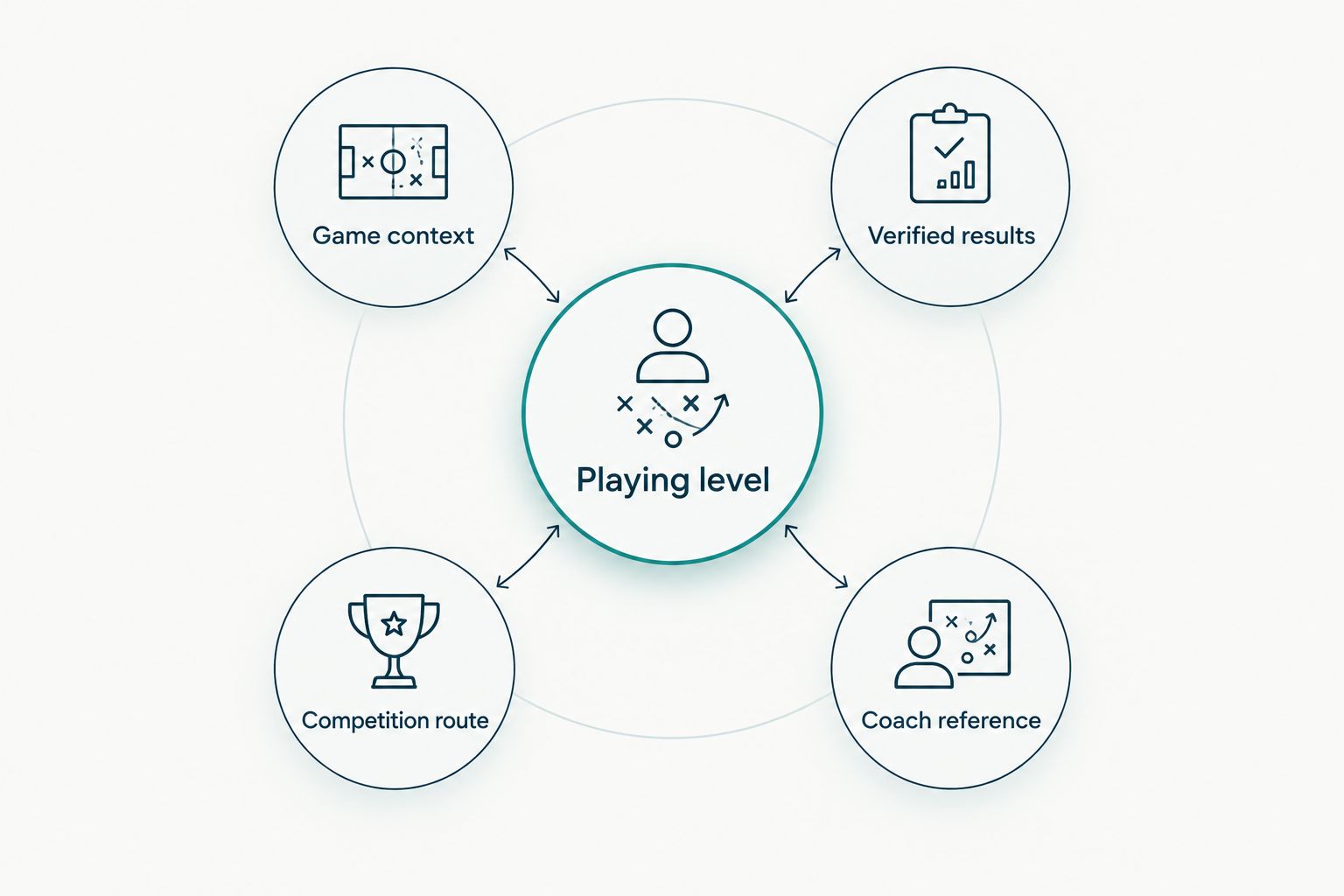
Show your playing level with verifiable evidence
Start with footage and results you already have. Choose material that lets a coach identify you, understand the competition, and evaluate skills relevant to your position. A dramatic edit is not a substitute for clear evidence.
For team sports, give coaches enough context to locate you before the action starts. Include access to longer game footage when available. For individual sports, present event results with the event name, date, and relevant conditions rather than an unsupported personal-best claim.
In your 2026 recruiting materials, label the season and competition accurately. If a clip comes from a practice or training session, say so. Do not present practice footage as a game performance.
A homeschool athlete does not need to apologize for a nontraditional competition route. Explain it plainly, then show evidence that helps the coach compare your performance with the program's needs.
- Identify yourself clearly in each video.
- Label your team, position, season, and opponents.
- Include game context rather than highlights alone.
- Present verified results where your sport uses them.
- Ask a coach who knows your play to serve as a reference.
Contact coaches with a clear reason you fit
Use your own email account and a simple contact log first. Write as the athlete, not as a parent speaking on your behalf. Your parent can proofread and help check details without taking over the relationship.
Your message should identify your graduation class, position or event, competition background, and academic status. Explain why you are contacting that program. A specific question about recruiting your position is more useful than a general request for a scholarship.
Include your film and relevant results, then make the next step easy to understand. Ask whether the staff is evaluating athletes in your class and what information they want next.
Coach communication rules differ by association, division, sport, and recruiting period. A delayed response does not establish either interest or rejection. Check the applicable rules and continue completing your academic and recruiting tasks while you wait.
- Use a subject line with your class and position or event.
- Explain your homeschool and competition arrangements briefly.
- Include your profile, film, and relevant academic information.
- Ask a specific question about recruiting fit.
- Log responses and requested follow-up materials.
Protect your academic plan while recruiting
Review your course plan manually with your parent or homeschool administrator before adding travel, camps, or competition commitments. Recruiting activity cannot repair a missing academic requirement after an application deadline has passed.
Separate two problems: learning support and eligibility documentation. You can understand a subject well and still need better records; you can also have organized records while needing help with the coursework itself. Address the actual problem rather than treating every academic concern as a transcript issue.
When evaluating homeschool tutoring programs, distinguish help with learning from responsibility for transcripts, course approval, and eligibility certification. Ask who teaches the material, how progress is documented, and which records the provider supplies.
For your 2026 plan, put academic tasks and recruiting tasks on the same calendar. Parents can manage administrative reminders, but you should know what remains unfinished and who needs the next document.
- Map remaining courses against admissions and eligibility requirements.
- Identify subjects where you need instructional support.
- Confirm who maintains each academic record.
- Schedule coursework around travel without dropping required work.
- Review unresolved academic questions before committing to a college.
Compare written aid terms before choosing a program
Start with the institution's written information, not a verbal description of what recruiting usually looks like. Ask the financial aid office to explain the components of your package and the athletics staff to clarify the proposed roster role.
Keep athletic aid, academic aid, need-based assistance, and admission separate in your notes. A coach's interest is not an admission decision. Likewise, an invitation to discuss joining a team does not establish that athletic aid accompanies the opportunity.
Evaluate the college even without the sport. Your academic options, location, support needs, and family circumstances still matter if your athletic plans change. This is a decision about where you will study as well as where you hope to compete.
Choose from documented terms, not assumptions about what a roster conversation means. Ask the institution to explain anything unclear before you accept its offer.
- Request written explanations of the aid being offered.
- Identify conditions attached to each aid component.
- Ask about renewal and changes in athletic participation.
- Confirm admissions and eligibility steps that remain incomplete.
- Discuss the full decision with your parent or supporting adult.
Compare college athletics routes
Choose your route based on athletic level, academics, and the institution's actual aid structure. These options are not a ranking of your ability, and none guarantees recruitment or admission.
| Option | Best for | Main advantage | Key limitation |
|---|---|---|---|
| NCAA Division I | Athletes whose performance matches a specific Division I program | Opportunity to pursue athletic aid where offered | Eligibility does not establish roster fit or an aid offer |
| NCAA Division II | Athletes targeting a Division II program that fits their sport and academics | Athletic aid is permitted | The institution determines what it offers an individual recruit |
| NCAA Division III | Athletes choosing a Division III academic and athletic environment | Academic and need-based aid can be considered separately | Division III schools do not award athletic scholarships |
| NAIA | Athletes whose college list includes NAIA institutions | Athletic aid is permitted | NAIA eligibility and institutional requirements need separate review |
| Two-year college athletics | Athletes who want a two-year college route | Another setting for college competition and academic study | Athletic aid rules vary by governing organization and division |
For every route, verify the college's current affiliation and the requirements that apply to you. A familiar division label does not answer questions about a particular program's recruiting needs.
Common mistakes homeschool athletes make
Treating homeschool graduation as athletic clearance
Your homeschool graduation requirements and college athletic eligibility are separate. Confirm both rather than assuming a diploma resolves every academic question. Keep the eligibility checklist beside your graduation plan.
Sending performance evidence without competition context
Unlabeled clips and results make a coach do extra detective work. State where you competed, who you faced, and how to identify you. Explain an independent or homeschool team structure directly instead of assuming the staff already knows it.
Confusing roster research with an available scholarship
A departing senior or coaching change is a research signal, not a promise. RecruitMyGame roster insights help you form better questions; the institution must confirm its recruiting needs and any aid offer.
Letting parents become the recruit's voice
Parents are valuable for records, travel planning, and financial decisions. You should lead coach conversations and understand your own materials. A coach needs to communicate with the person who would join the team.
FAQ
Can homeschool athletes get athletic scholarships?
Yes, homeschool athletes can receive athletic scholarships at institutions that offer them if they meet the applicable requirements and receive an offer. Homeschool status does not replace academic eligibility, admission, or a coach's evaluation.
Do homeschool athletes need NCAA eligibility certification?
Homeschool athletes pursuing NCAA Division I or Division II participation need to follow the applicable NCAA Eligibility Center process. Review the homeschool instructions and confirm your situation with the college's compliance office.
Can I get an athletic scholarship at a Division III college?
No, NCAA Division III colleges do not award athletic scholarships. Ask the institution about academic and need-based aid without treating those awards as athletic aid.
What academic records should a homeschool recruit prepare?
Prepare a clear transcript and retain course descriptions, curriculum information, and records from outside providers. Follow the specific submission instructions of each institution and eligibility organization.
How do I prove my playing level without a traditional school team?
Provide identifiable film, documented competition results, and a coach reference who can explain your level. Describe your club, homeschool association, independent team, or individual competition route clearly.
Does RecruitMyGame guarantee a roster opening or scholarship?
No, RecruitMyGame roster and coach-fit insights are research, not guarantees of openings, playing time, offers, scholarships, or admission. Confirm program needs and any offer directly with the institution.
Can I use a recruiting profile for any sport?
RecruitMyGame profiles support 20+ sports, but its research coverage is narrower. Tosch.ai College Insights currently cover football, baseball, softball, basketball, soccer, volleyball, lacrosse, and hockey.
One last thing
Before sending your next recruiting message, open your profile and academic file as if you were a coach who has never met you. Can you identify your position, graduation class, competition level, and academic status without asking a parent to explain?
For your 2026 recruiting effort, fix the least clear answer first. Make your fit understandable before asking someone to evaluate it.