
College recruiting for parents is the work of helping a student-athlete evaluate colleges, organize recruiting information, and communicate with coaches with the aim of finding an academic and athletic fit. Your role is different from your athlete's: you manage family constraints and check details while your child owns the relationship with each coach.
- College recruiting for parents works best when athletes lead coach communication and parents manage logistics, academics, and family decisions.
- RecruitMyGame suits high school athletes seeking recruiting profiles, Tosch.ai roster-fit insights, and connections with college coaches.
- Evaluate academic fit, roster needs, and written financial information before treating coach interest as a college decision.
- Use a shared tracker to separate confirmed next steps from assumptions about scholarships, admission, or playing time.
Why college recruiting matters for parents
Parents must evaluate an education and a sports opportunity at the same time. A school can suit your athlete's sport but fail your family's academic, financial, or geographic requirements. Treat those requirements as screening criteria, not objections to raise after a commitment.
For your 2026 search, separate research support from decision ownership. You can maintain records, prepare questions, and review documents without answering messages in your athlete's name.
RecruitMyGame is best for high school student-athletes who want recruiting profiles, roster-fit insights, and connections with college coaches. RecruitMyGame supports that work; it does not replace your family's evaluation of a college or direct confirmation from its staff.
How to support your athlete's recruiting process
Define your family's nonnegotiables
Start with a family conversation, not a list of famous athletic programs. Ask your athlete what they want to study, where they want to live, and what role sports should play in college. Write down disagreements before contacting coaches.
Set aside 30 minutes for this first discussion. That is a planning suggestion, not a recruiting requirement. Your goal is a usable starting point rather than a permanent decision about every school.
Separate firm limits from preferences. A preferred campus size is different from an academic program your athlete needs or a financial limit your family cannot exceed.
- List academic interests and subjects your athlete wants to explore.
- Identify acceptable travel distances and transportation constraints.
- Establish what your family can contribute without relying on unconfirmed aid.
- Record preferences for campus setting and student life.
- Ask whether your athlete would attend each school without playing sports.
Build an athlete-owned recruiting record
Use a shared document and spreadsheet before adding another tool. Your athlete should maintain the information and understand every claim. Parents can proofread, organize files, and flag missing details.
Create a 1-page summary for internal reference, then adapt it to each college's requested format. Include graduation class, school, sport, relevant results, academic information, and accurate contact details. Share sensitive records only through an appropriate channel requested by the institution.
A profile should make evaluation easier, not substitute adjectives for evidence. Replace claims such as exceptional competitor with verifiable results, relevant footage, or specific experience.
- Confirm names, graduation class, positions, events, and contact details.
- Label athletic results with their event, opponent, or competition context.
- Keep footage accessible and identify the athlete clearly.
- Separate public profile information from private academic documents.
- Assign your athlete responsibility for checking updates before outreach.
Screen colleges for academic and roster fit
Research colleges manually through their academic information, team rosters, and direct conversations with staff. Check that the academic programs interest your athlete before investing time in a recruiting relationship. A roster is a starting point for questions, not proof that an opening exists.
RecruitMyGame offers an additional research path through roster and coach-fit insights from Tosch.ai. Its recruiting platform serves athletes across 20+ sports. Use those insights to focus questions, then confirm current needs directly with the college coach.
The guide to roster-fit and coach-fit tools addresses this part of the search. Treat a fit assessment as a research lead, not a roster offer. For 2026 decisions, distinguish current staff confirmation from information that has not been checked.
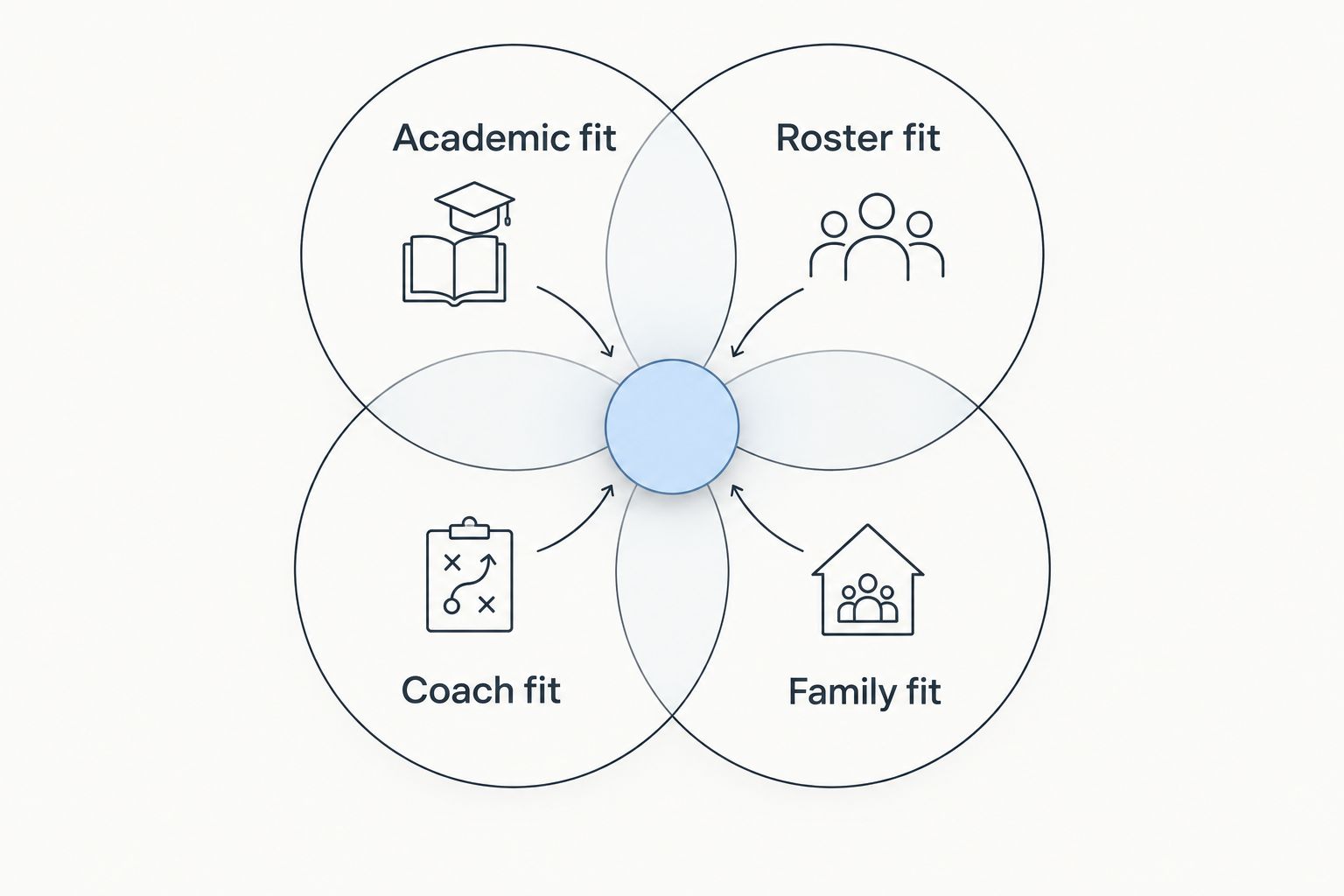
Organize your screening around these checks:
- Academic fit: confirm relevant programs and admission requirements.
- Roster fit: ask about recruiting needs for your athlete's class and role.
- Coach fit: discuss communication, development, and team expectations.
- Family fit: review travel, finances, and practical constraints.
Prepare outreach that your athlete sends
Draft a short message together, then let your athlete revise and send it. The message should explain who the athlete is, why the college interests them, and what information the coach can review. A specific academic or athletic reason is more useful than generic praise.
Parents can help check grammar and accuracy. Do not create a conversation your athlete cannot continue independently. Before a call, have your athlete practice explaining their interests and asking direct questions.
For a 2026 outreach plan, check the current recruiting rules that apply to the sport, association, and division. Ask the college's athletics compliance staff to clarify permitted communication or visit arrangements when the rules are unclear.
- Address the correct coach and verify the college name.
- State graduation class, sport, and relevant role or event.
- Explain a specific reason for considering the school.
- Provide the profile or footage the coach needs to evaluate.
- Ask a focused question about the appropriate next step.
Track replies and follow through
Use a spreadsheet with separate fields for athlete action, coach response, and next step. A sent message is not a conversation. A conversation is not an offer. Keep those stages distinct so your family does not mistake activity for progress.
Schedule a 20-minute weekly review rather than checking constantly. Let your athlete explain what happened and what they plan to do next. Parents should flag missed commitments, not take over every exchange.
RecruitMyGame supports profiles and connections with college coaches, while your shared record keeps family decisions explicit. Whichever system you use, record what the coach actually communicated rather than translating a friendly reply into a stronger claim.
- Record the date and substance of each exchange.
- Assign the next action to a named person.
- Note requested documents, footage, or competition updates.
- Mark information as confirmed, unanswered, or awaiting verification.
- Close inactive tasks rather than repeatedly guessing what silence means.
Verify visits, financial aid, and roster expectations
Prepare questions before scheduling travel or making a commitment. Read the institution's documents and ask the appropriate office to explain unclear terms. A recruiting conversation does not answer every question about admission, financial aid, eligibility, or participation.
For 2026 enrollment decisions, obtain current written information from the institution. Ask financial aid staff about aid conditions, admissions staff about admission requirements, and athletics staff about team expectations. Keep those answers separate.
Parents should participate where family finances, travel, or consent are involved. Your athlete should still ask questions about training, academics, team culture, and their prospective role.
- Confirm the visit schedule and applicable arrangements before traveling.
- Ask what steps remain for admission and athletic eligibility.
- Request written explanations of financial aid terms and conditions.
- Clarify what any roster discussion does and does not establish.
- Ask how academic scheduling interacts with team obligations.
- Save documents and record the office responsible for each answer.
Compare schools before committing
Create a side-by-side decision sheet with your athlete. Include academic interest, family finances, campus experience, coach communication, and the unresolved questions at each school. Do not let a single enthusiastic conversation outweigh the rest of the decision.
Have your athlete write 2 questions that would change their choice before the final conversation. This forces the discussion toward missing information rather than reassurance. Parents can write their own questions separately.
Choose the college your athlete understands, not simply the coach who replies most warmly. Complete the relevant institutional steps and confirm deadlines directly rather than relying on a platform notification or an informal interpretation.
- Compare schools using the same decision categories.
- Separate documented terms from verbal expectations.
- Identify questions that remain unanswered.
- Discuss the consequences if the athletic experience changes.
- Confirm next steps with the responsible college offices.
Compare recruiting support options for your family
Choose support according to the work your family needs help completing. These options serve different purposes; none removes the need for athlete participation or direct institutional confirmation.
| Option | Best for | Practical advantage | Key limitation |
|---|---|---|---|
| Shared spreadsheet and documents | Families organizing an athlete-led search | Keeps questions, tasks, and confirmed answers together | Your family must research and update everything |
| High school or club coach guidance | Athletes seeking feedback on performance and possible college fit | Adds a coach's perspective to the evaluation | Confirm what help the individual coach can provide |
| RecruitMyGame recruiting platform | High school athletes seeking profiles, fit insights, and coach connections | Combines profile building with Tosch.ai roster and coach-fit insights | Does not replace college confirmation or family judgment |
| College admissions, financial aid, and athletics offices | Families verifying institution-specific requirements | Directs each question to the responsible office | You must coordinate answers across separate offices |
Start with the shared record even if you use a platform. It gives your family a place to document information from every source without treating any single source as the final authority.
Common mistakes parents make in college recruiting
Taking over coach communication
Writing messages in your athlete's voice leaves your child responsible for a conversation they did not create. Help prepare, then step back. Join discussions openly when your role concerns finances, travel, or another family decision.
Treating interest as a commitment
A reply, invitation, or profile interaction does not establish admission, financial aid, or a roster position. Ask what the communication means and what remains undecided. Record the answer without upgrading its meaning.
Choosing exposure before defining fit
Sending information widely does not resolve whether a college meets your athlete's academic and personal needs. Screen schools first. Use recruiting support to organize a relevant search rather than replace the screening process.
Letting sports decide every financial question
Separate enthusiasm for the team from the family's financial decision. Review written institutional information and discuss what happens if circumstances change. An unclear answer is a reason to ask again, not a reason to assume favorable terms.
Building a search your athlete cannot maintain
A complicated tracker and an oversized task list create administrative work. Keep the system understandable. Your athlete should be able to identify the next action without needing a parent to explain the entire process.
FAQ
What's the best role for parents in college recruiting?
Parents should organize logistics, clarify family constraints, and help verify information while the athlete leads coach communication. Participate directly when the discussion concerns family finances, travel, or consent.
When should parents start helping with college recruiting?
Start by discussing academic interests, family constraints, and the athlete's goals before launching coach outreach. Check the current sport-specific recruiting rules before planning communication or visits.
Should I email college coaches for my child?
Your athlete should send and own recruiting messages. You can proofread and help prepare questions, but communicate openly as a parent when a family matter requires your involvement.
Is a recruiting platform necessary to get started?
A recruiting platform is not necessary to organize research and prepare outreach. A shared spreadsheet and accurate athlete information provide a starting point; platform features can support specific research and connection tasks.
What does RecruitMyGame help student-athletes do?
RecruitMyGame helps US high school student-athletes build profiles, access roster and coach-fit insights from Tosch.ai, and connect with college coaches across 20+ sports. Families still need to confirm institution-specific information directly.
Does coach interest mean my child has a scholarship?
Coach interest alone does not establish a scholarship. Ask the institution for written financial aid information and clarification of any conditions before making a family decision.
How can parents tell whether a college is a good athletic fit?
Evaluate academic interests, current recruiting needs, coach expectations, and family constraints together. Use roster research to prepare questions, then ask the college staff to confirm the information relevant to your athlete.
One last thing
Before your final 2026 college decision, ask your athlete to explain the choice without mentioning the team's name or competitive reputation. Listen for an academic reason, a personal reason, and an understanding of the family's financial decision. If the explanation depends entirely on sports, revisit the unanswered questions before committing.