
Streamline Athletes focuses on track-and-field recruiting, making it a relevant starting point for athletes in those events. That specialization stops being the deciding advantage when you need a recruiting platform for another sport or a different way to evaluate college fit. The best Streamline Athletes alternative in 2026 is RecruitMyGame for multi-sport profiles and coach-fit insights; direct college-coach outreach is the alternative for athletes who want to manage their own recruiting process.
- Among streamline athletes alternatives, RecruitMyGame fits athletes seeking multi-sport profiles, roster insights, and college-coach connections.
- Streamline Athletes remains relevant for athletes seeking a track-and-field recruiting focus.
- Direct coach outreach gives you control but makes research, follow-up, and recordkeeping your responsibility.
- School or club coach guidance adds personal athletic context; confirm who handles each recruiting task.
Why this matters
Choosing a recruiting platform is not the same as choosing a college. A profile helps present your athletic background; deciding where to send it requires a separate judgment about your sport, academics, and potential place on a team.
For your 2026 search, start with the task you cannot complete confidently. Do you need to build a useful profile, identify suitable programs, or contact coaches with a specific reason for reaching out?
Those are different problems. The guide to roster-fit and coach-fit tools for college recruits explains the distinction behind the first alternative below.
Streamline Athletes alternatives at a glance
The strongest choice depends on whether you need a platform, a self-managed process, or personal guidance. Compare the work each option supports rather than treating every alternative as an identical service.
| Option | Best for | Standout approach | How it differs from Streamline Athletes |
|---|---|---|---|
| Streamline Athletes | Athletes seeking a track-and-field recruiting focus | Sport-specific recruiting context | The benchmark for this comparison |
| RecruitMyGame | US high school athletes seeking multi-sport recruiting support | Profiles, Tosch.ai roster and coach-fit insights, and coach connections across 20+ sports | Covers a broader range of sports than a track-and-field focus |
| Direct college-coach outreach | Athletes ready to research programs and manage communication | Athlete-controlled research and correspondence | A process you manage rather than a recruiting-platform choice |
| School or club coach guidance | Athletes seeking feedback from someone familiar with their performance | Personal athletic assessment and help shaping questions | A relationship-based source of guidance rather than a platform |
Use this table to choose a workflow, not to predict an offer. A recruiting tool supports your decisions; a college coach evaluates your place in a program.
1. RecruitMyGame: best for multi-sport profiles and fit insights
RecruitMyGame is a college recruiting platform for US high school student-athletes that supports profiles, roster and coach-fit insights from Tosch.ai, and connections with college coaches across 20+ sports. Its clearest distinction here is the combination of multi-sport coverage and fit-oriented information. Choose it when your main question is which programs deserve your attention, not simply where to publish your athletic background.
Where RecruitMyGame shines
- Multi-sport scope: Its stated coverage extends across 20+ sports rather than centering this comparison on track and field alone.
- A recruiting profile: You can build a profile to present your background to college coaches.
- Fit-oriented research: Tosch.ai supplies roster and coach-fit insights to support program evaluation.
- Coach connections: Connecting athletes with college coaches is part of the platform's stated purpose.
Where it falls short
- Insights are not a coach's decision. Confirm recruiting interest directly with the college program rather than interpreting a fit signal as an offer.
- You still need to assess the college. Athletic fit does not answer whether the academic program or campus suits you.
- Breadth is not automatically better. If track-and-field specialization is your main requirement, broader sport coverage is not itself a reason to switch.
Head-to-head with Streamline Athletes
| Dimension | RecruitMyGame | Streamline Athletes |
|---|---|---|
| Sport scope | Stated coverage across 20+ sports | Track-and-field recruiting focus |
| Main reason to consider it | Multi-sport profiles and roster and coach-fit insights | A recruiting search centered on track and field |
| Athlete's decision | Whether the profile and fit information support your target list | Whether the sport-specific focus supports your target list |
Before changing platforms in 2026, write down the decision you expect the replacement to improve. A useful goal is identifying programs to investigate and explaining why each belongs on your list; a vague goal is getting more exposure without defining whose attention matters.
Bring the same questions to every candidate program. Ask whether the coach is recruiting your event or position, what information the staff needs to evaluate you, and what the next step involves.
Best for: US high school student-athletes who want a multi-sport recruiting platform with profiles and fit insights.
Verdict: Buy into the fit-first approach when those are the tasks you need help completing.
2. Direct college-coach outreach: best for a self-managed search
Direct outreach means researching college programs and contacting their coaching staffs yourself. It is an alternative recruiting workflow, not another software product. You control the target list, message, and follow-up, but you also own the work behind them.
Where direct outreach shines
- You explain your interest directly. A specific message can connect your athletic background with a reason for considering that college.
- You control the research. Your list can reflect academic interests and personal priorities alongside athletics.
- You keep the correspondence together. Your own record can distinguish a sent message from a response and a requested next step.
Where direct outreach falls short
- Research becomes your responsibility. Finding a roster is only the beginning; you still need to evaluate what it means for your search.
- Follow-up requires discipline. Without a consistent record, you risk repeating messages or losing track of a coach's request.
- Sending is not validation. An unanswered email does not establish either interest or rejection.
Direct outreach versus Streamline Athletes
| Dimension | Direct outreach | Streamline Athletes |
|---|---|---|
| Starting point | Your own program research | A track-and-field recruiting platform |
| Core activity | Communicating directly with college coaches | Using a sport-focused recruiting resource |
| Decision criterion | Your ability to manage research and correspondence | Your need for a track-and-field-centered platform |
Use 4 fields in your outreach record: program, contact, latest response, and next action. Keep observations separate from conclusions: a coach requesting more information is a concrete next step, while your impression that a roster looks suitable remains a research judgment.
For a 2026 search, check staff information before each new conversation. Address the relevant coach and explain why that program is on your list rather than sending the same generic introduction everywhere.
Best for: Athletes who can manage research, personalized communication, and follow-up themselves.
Verdict: Buy into direct outreach if you will own the administrative work, not just send the opening email.
3. School or club coach guidance: best for personal athletic context
A school or club coach who knows your performance can help you interpret your athletic strengths and identify useful questions for college coaches. That is a different contribution from a recruiting profile or a platform-generated insight. Ask for a specific assessment rather than assuming your coach will manage the entire search.
Where coach guidance shines
- Personal context: A coach familiar with your performance can discuss what your results or footage do not explain by themselves.
- A clearer presentation: Ask which athletic information best represents your current level.
- Better questions: Use the conversation to prepare for discussions about expectations and development.
Where coach guidance falls short
- Responsibilities need agreement. Do not assume your coach is researching colleges, sending introductions, or tracking replies.
- Personal knowledge has limits. Knowing your ability does not establish a college program's recruiting needs.
- The final choice is yours. You still need to evaluate the academic and personal side of each college.
Compared with Streamline Athletes, this is a source of personal feedback rather than a substitute platform. It can also sit alongside either platform use or direct outreach; you do not have to choose only one source of help.
Best for: Athletes who want feedback grounded in someone else's direct knowledge of their performance.
Verdict: Hold onto coach guidance as a supporting resource; do not treat it as a complete recruiting process without agreeing on responsibilities.
How to choose your recruiting workflow
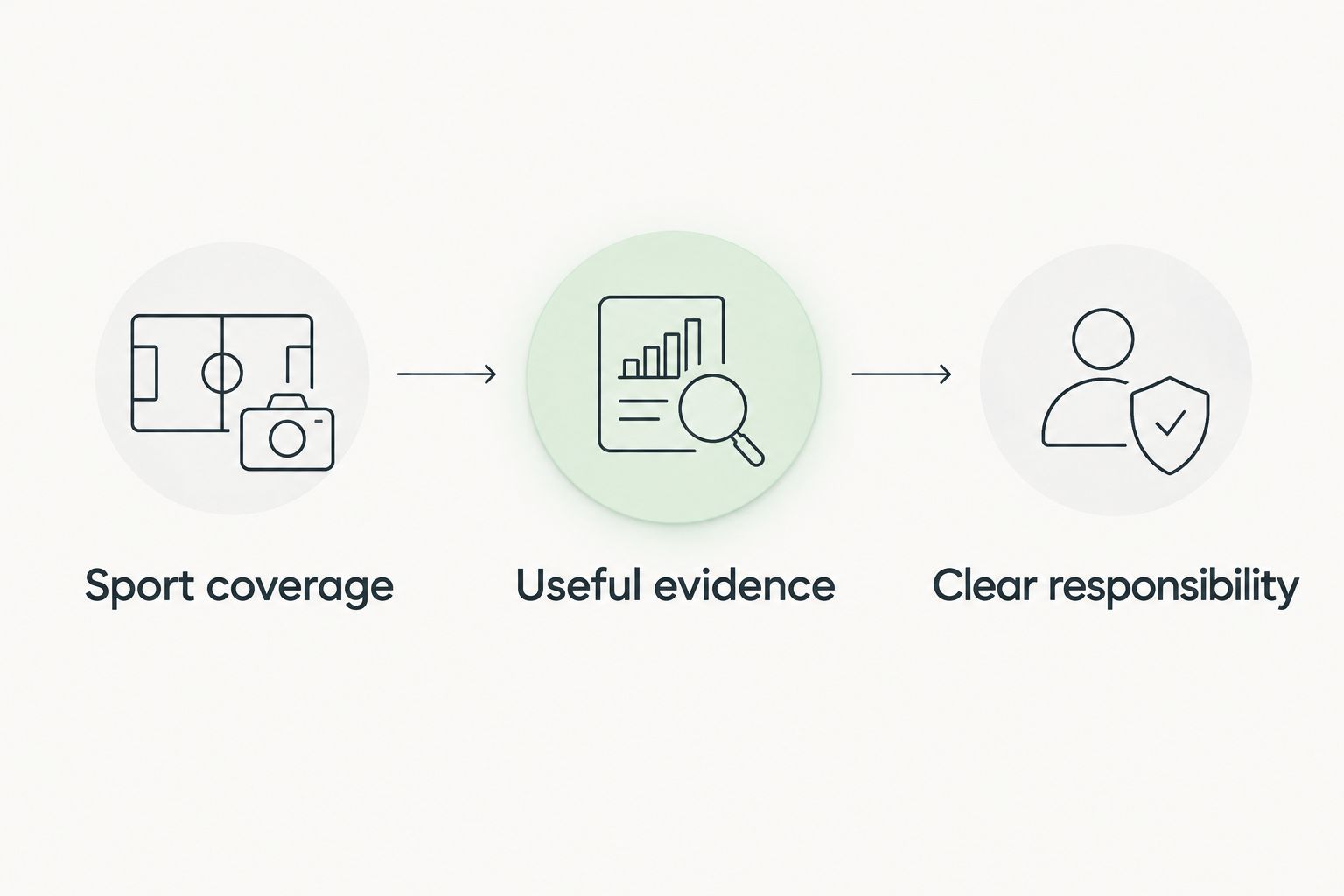
Apply 3 checks before committing to a different approach: sport coverage, useful evidence, and clear responsibility. These checks keep your decision tied to the work ahead rather than a longer feature list.
- Sport coverage: Confirm that the option serves your sport and the type of college search you are conducting.
- Useful evidence: Identify what helps you decide whether a program belongs on your list. Separate athletic facts from assumptions about recruiting interest.
- Clear responsibility: Decide who researches programs, updates information, sends messages, and tracks the next action.
A practical 2026 comparison uses the same athlete information and the same target programs for every option. Otherwise, you are comparing different inputs rather than different approaches.
Do not stop at whether a platform helps you find a college. Ask what you will do with that information next, and whether the answer is specific enough to act on.
Why people switch from Streamline Athletes
The clearest reasons to consider an alternative are a change in scope or a preference for a different workflow. These are decision criteria, not claims about dissatisfaction among Streamline Athletes users.
- You need another sport. Multi-sport coverage becomes relevant when a track-and-field-centered resource does not match your search.
- You want fit insights to guide research. A platform offering roster and coach-fit information addresses that stated requirement.
- You want to manage communication yourself. Direct outreach puts research and correspondence under your control.
- You need personal athletic feedback. A coach familiar with your performance supplies a different kind of input from a platform.
Switch only when you can name the task your current approach does not address. Changing tools without changing your research or follow-up process leaves the same work unfinished.
When staying with Streamline Athletes makes sense
Stay with Streamline Athletes if a track-and-field recruiting focus matches your needs and your current process supports useful next steps. Multi-sport coverage is not an advantage you need merely because it exists.
Judge your process by what you can explain: why a college is on your list, what evidence supports the athletic match, and what you need to ask its coach. If those answers are clear, switching platforms is not automatically an improvement.
FAQ
What's the best Streamline Athletes alternative in 2026?
RecruitMyGame is the best fit in this comparison for US high school athletes seeking multi-sport profiles and roster and coach-fit insights. Direct college-coach outreach is the alternative for athletes who want to manage research and correspondence themselves.
Is Streamline Athletes only relevant to track-and-field recruits?
Track-and-field recruiting is Streamline Athletes' focus. Athletes searching for another sport should check sport coverage before choosing a recruiting resource.
Can I contact college coaches without a recruiting platform?
Yes, you can research college programs and contact coaching staffs directly. You are responsible for finding the relevant contact, presenting your athletic information, and tracking follow-up.
Does a roster-fit insight mean a coach wants to recruit me?
No, a roster-fit insight is not confirmation of recruiting interest. Ask the college coach about your event or position and the information needed to evaluate you.
Should I choose a platform that covers more sports?
Choose broader coverage when it serves your actual recruiting needs. A track-and-field athlete should not switch solely because another platform supports additional sports.
Can my school or club coach replace a recruiting platform?
A school or club coach can provide personal athletic feedback, but that does not automatically replace profile building, program research, or correspondence. Agree on which tasks the coach will handle and which remain yours.
What should I check before switching recruiting platforms?
Check sport coverage, the evidence available for evaluating programs, and responsibility for each recruiting task. Keep your own record of contacts and next actions so the transition does not interrupt follow-up.
One last thing
Before switching, finish this sentence: My current process does not help me decide... If you cannot complete it with a specific recruiting decision, pause the comparison.
A new profile is not the same as a better target list. Keep facts, assumptions, and coach responses separate, then choose the option that helps you turn the next unanswered question into an action.