
ScoutDay deserves to stay on your shortlist when it already gives you a useful way to present your recruiting information. The ceiling is the point where presenting yourself no longer answers your next question: which college programs should you contact? The best ScoutDay alternative in 2026 is RecruitMyGame if you need athlete profiles plus roster and coach-fit insights; direct coach outreach is the alternative if you want to manage contact yourself.
- RecruitMyGame leads these scoutday alternatives for athlete profiles, roster-fit insights, and coach connections across 20+ sports.
- Choose direct coach outreach when you want to research programs and manage recruiting conversations yourself.
- Choose Hudl when organizing and sharing athletic video is your main task, not selecting colleges.
- Stay with ScoutDay when your current workflow supports the next recruiting action you actually need.
Why this matters
A recruiting profile and a college shortlist solve different problems. A profile presents your athletic background; a shortlist determines where you spend your attention. Switching platforms without identifying that distinction leaves you rebuilding the same information somewhere else.
For your 2026 search, separate the decision into 3 checks: presenting your record, evaluating programs, and contacting coaches. Choose the alternative that addresses your weakest step rather than the one with the longest feature list.
ScoutDay alternatives at a glance
The useful comparison in 2026 is not which platform has the most features. It is which option supports your next recruiting decision. ScoutDay remains in the table as the baseline; assess its role against your actual experience rather than assuming every alternative replaces it completely.
| Option | Best for | Standout function or approach | Difference to assess against ScoutDay |
|---|---|---|---|
| ScoutDay | Continuing a recruiting workflow that already works for you | Keeping your existing recruiting activity together | Establish what your current setup already handles before replacing it |
| RecruitMyGame | US high school athletes seeking profiles and program-fit insights | Athlete profiles, Tosch.ai roster and coach-fit insights, and college coach connections across 20+ sports | Compare how each option helps you decide which programs to contact |
| Direct coach outreach | Athletes who want to manage research and communication themselves | Contacting college coaching staffs directly | You own the research, recordkeeping, and follow-up instead of centering the process on a platform |
| Hudl | Athletes whose immediate priority is presenting video | Athletic video review and sharing | Evaluate video presentation separately from college selection and coach-fit research |
Do not treat these options as interchangeable. A video workflow, a recruiting platform, and direct outreach can support different parts of the same recruiting process.
1. RecruitMyGame: best for profiles and college-fit research
RecruitMyGame is a college recruiting platform for US high school student-athletes. It combines athlete profiles, roster and coach-fit insights from Tosch.ai, and connections with college coaches across 20+ sports.
Best for: Athletes who need to move from describing themselves to deciding which college programs deserve further research. The combination matters when your next task is building a reasoned contact list, not simply creating another profile.
Where the platform shines
- Profile building: You can establish a place to present your athletic background.
- Program-fit research: Tosch.ai provides roster and coach-fit insights to inform your shortlist.
- Coach connections: Connecting with college coaches is part of the platform's stated purpose.
- Sports breadth: Coverage spans 20+ sports rather than being described around a single sport.
The strongest reason to choose this option is the connection between profile information and program research. Before contacting a coach, identify what you want that coach to evaluate and why that college belongs on your list.
Where the platform falls short
- Fit insights are not a coach's statement of interest, an offer, or an admissions decision.
- A platform does not remove your responsibility to keep athletic and academic information accurate.
- If you only need to organize video, the profile-and-fit workflow is broader than that immediate task.
These are practical limits, not reasons to dismiss the platform. Use insights to decide what to investigate, then ask the relevant coaching staff about your specific situation.
Head-to-head with ScoutDay
| Dimension | RecruitMyGame | ScoutDay decision check |
|---|---|---|
| Athlete presentation | Athlete profile building is part of the platform | Does your current profile present the information you need to share? |
| College selection | Tosch.ai supplies roster and coach-fit insights | Does your current workflow help you explain why a program belongs on your list? |
| Coach contact | Connecting athletes with college coaches is part of its stated purpose | Can you complete your intended contact and follow-up workflow? |
| Sports scope | Covers 20+ sports | Confirm support for your own sport and recruiting needs |
Verdict: Buy into this approach when college-fit research is the missing step; skip a switch made only to rebuild an existing profile.
2. Direct coach outreach: best for self-managed recruiting
Direct coach outreach means researching colleges and contacting their coaching staffs yourself. It is a workflow rather than a software subscription, and you can use it alongside an existing recruiting profile.
Best for: Athletes who want control over their shortlist, messages, and follow-up. You decide which programs to approach and keep your own record of each conversation.
Where direct outreach shines
- Specific questions: You can ask a coaching staff about your sport, position, graduation class, and next steps.
- Message ownership: You decide what to send and why it matters to that program.
- Flexible materials: Your message can point coaches toward the athletic information and video you already maintain.
Where direct outreach falls short
- You must research programs and maintain your own contact records.
- Sending a message does not establish that a coach reviewed it or wants to recruit you.
- Without a clear shortlist, self-managed outreach becomes a collection of unrelated messages.
Head-to-head with ScoutDay
| Dimension | Direct coach outreach | ScoutDay decision check |
|---|---|---|
| Research | You gather and assess program information | Which research tasks does your current workflow already support? |
| Communication | You write and manage messages yourself | Does the existing setup help you complete the contact you need? |
| Recordkeeping | You maintain the contact history | Would leaving create more administrative work? |
Keep 4 fields in your contact record: program, contact date, question asked, and next action. Those fields make the record useful without turning it into an elaborate project.
Verdict: Hold your existing profile and add direct outreach when communication—not platform functionality—is the missing step.
3. Hudl: best for a video-first task
Hudl supports athletic video review and sharing. It belongs on a ScoutDay alternatives shortlist when your immediate task is presenting video, but video presentation is not the same as evaluating college fit.
Best for: Athletes who need a clearer way to organize and share athletic footage.
Where Hudl shines
- Its video focus matches a defined task: showing athletic performance.
- Video can support the information you send during direct coach outreach.
Where Hudl falls short
- A video workflow alone does not answer which colleges you should target.
- Sharing footage does not establish recruiting interest or an available roster opportunity.
| Dimension | Hudl | ScoutDay decision check |
|---|---|---|
| Primary task | Athletic video review and sharing | Identify whether video is actually the problem you need to solve |
| College shortlist | Video alone is not a college-selection method | Assess program research separately |
| Next action | Prepare footage for review | Decide whether to supplement or replace the existing workflow |
Verdict: Buy into a video-first approach only when video is the bottleneck; skip it as a substitute for college-fit research.
How to choose without rebuilding everything
Use the same recruiting task to assess every option. Otherwise, you end up comparing one platform's profile tools with another option's video functions and learning little about either.
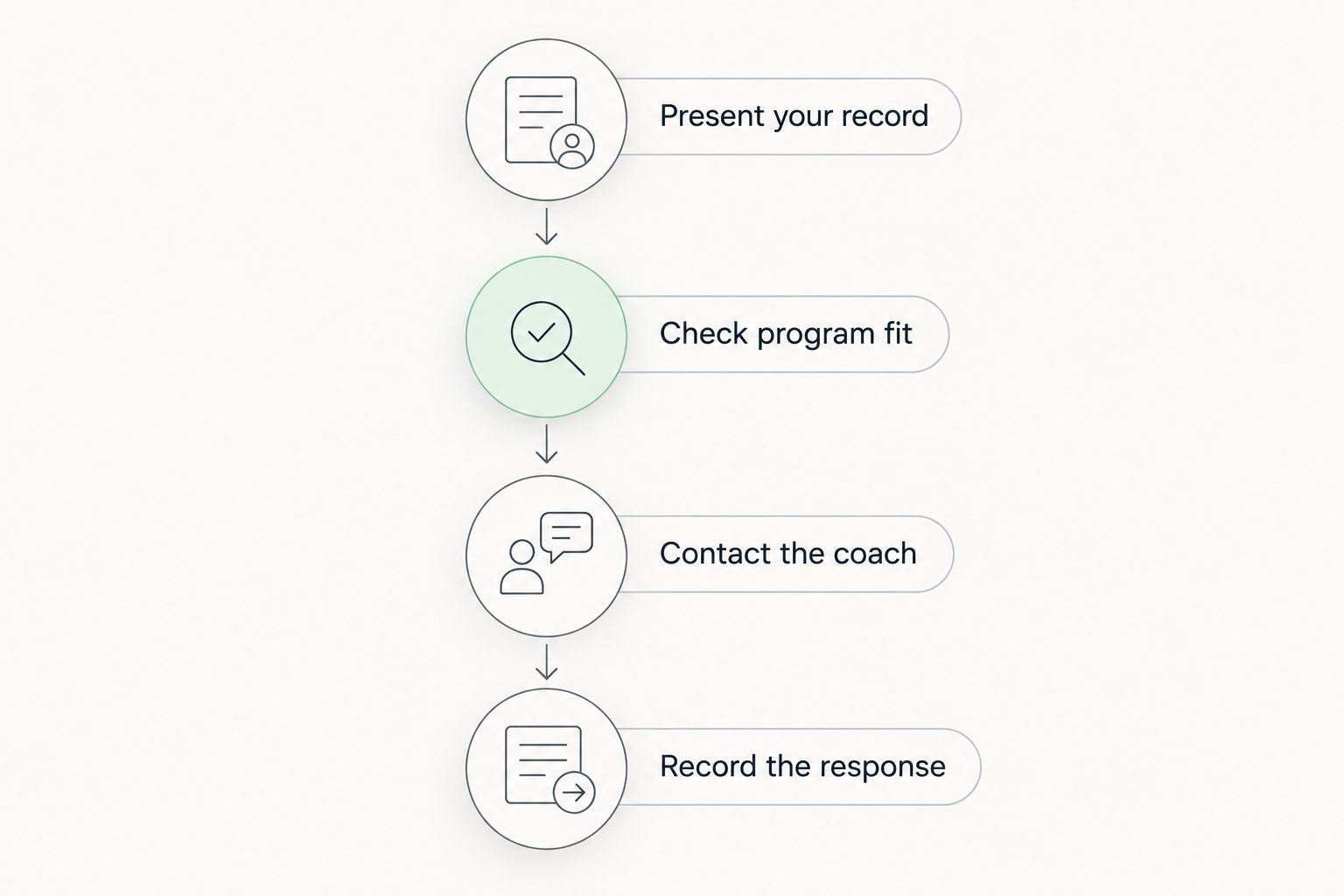
Start with the point where your current process stops producing a clear next action. Follow this sequence before moving your information:
- Present your record. Identify the athletic background, academic information, and relevant footage you need a coach to review.
- Check program fit. Write down why a college belongs on your shortlist and which questions remain unanswered.
- Contact the coach. Prepare a message with a specific purpose rather than a general request to be recruited.
- Record the response. Keep the reply and next action together so your next message reflects the conversation.
A useful comparison ends with an action you can take. If a platform helps you identify a program, ask what you still need to verify; if it helps you share a profile, decide which coach should receive it and why.
Why people switch from ScoutDay
A sound reason to switch in 2026 is a mismatch between your current workflow and your next recruiting task. These are decision criteria, not claims about ScoutDay's policies or features.
- You need program-fit research. Your profile is ready, but you cannot explain why particular colleges belong on your list.
- You need clearer video presentation. The immediate obstacle is organizing footage for evaluation, not finding another profile builder.
- You need control over contact. You want to manage individual messages, questions, and follow-up yourself.
- You need to verify sport relevance. Before changing tools, confirm that the option supports the recruiting work required for your sport.
Do not switch because a new account feels like progress. Write one sentence describing the problem first: what cannot you do effectively today, and which alternative directly addresses it?
When staying with ScoutDay is the right call
Stay with ScoutDay when your existing workflow lets you present your record, carry out your intended recruiting tasks, and track what happens next. A different interface is not a recruiting outcome.
Supplementing your setup is also a valid decision. Direct outreach can sit alongside a profile, and a separate video workflow can address footage without requiring you to move everything else.
Before leaving, identify which information and conversations you need to preserve. Keep your records consistent so coaches do not receive conflicting athletic details from different places.
FAQ
What's the best ScoutDay alternative in 2026?
RecruitMyGame is the best fit on this shortlist for US high school athletes who want profile building, roster and coach-fit insights, and college coach connections. Choose direct coach outreach instead when you want to manage research and communication yourself.
Should I replace ScoutDay or use another option alongside it?
Keep ScoutDay when it still handles a useful part of your recruiting process. Add another option only for a distinct task, such as video presentation or program-fit research, rather than maintaining duplicate profiles without a purpose.
Is Hudl a complete replacement for a recruiting platform?
Hudl's video workflow is not the same as a complete college recruiting process. You still need to select programs, communicate with coaches, and keep track of the resulting conversations.
Can I contact college coaches without switching recruiting platforms?
Yes, direct coach outreach does not require replacing your current recruiting profile. Research the program, follow applicable recruiting rules, and send a specific message using accurate information.
Do roster-fit insights mean a coach wants to recruit me?
No, roster-fit insights are not confirmation of a coach's recruiting interest. Use them to guide research, then ask the coaching staff about your individual situation.
What should I compare before choosing a ScoutDay alternative?
Compare athlete presentation, program-fit research, coach contact, and recordkeeping against your immediate recruiting task. Choose the option that addresses the missing step instead of comparing unrelated feature lists.
What should I save before changing recruiting platforms?
Save the athletic information, video references, contact history, and next actions you need to continue your recruiting work. Check that the information you share remains consistent across any profiles you keep.
One last thing
A coach's reply changes your recruiting picture; creating another account does not. For your 2026 search, choose a tool by the next useful action it enables, then complete that action before adding another platform.
If your shortlist is the problem, investigate program fit. If your footage is the problem, organize video. If your message is the problem, write a specific question for the coaching staff instead of rebuilding your profile.