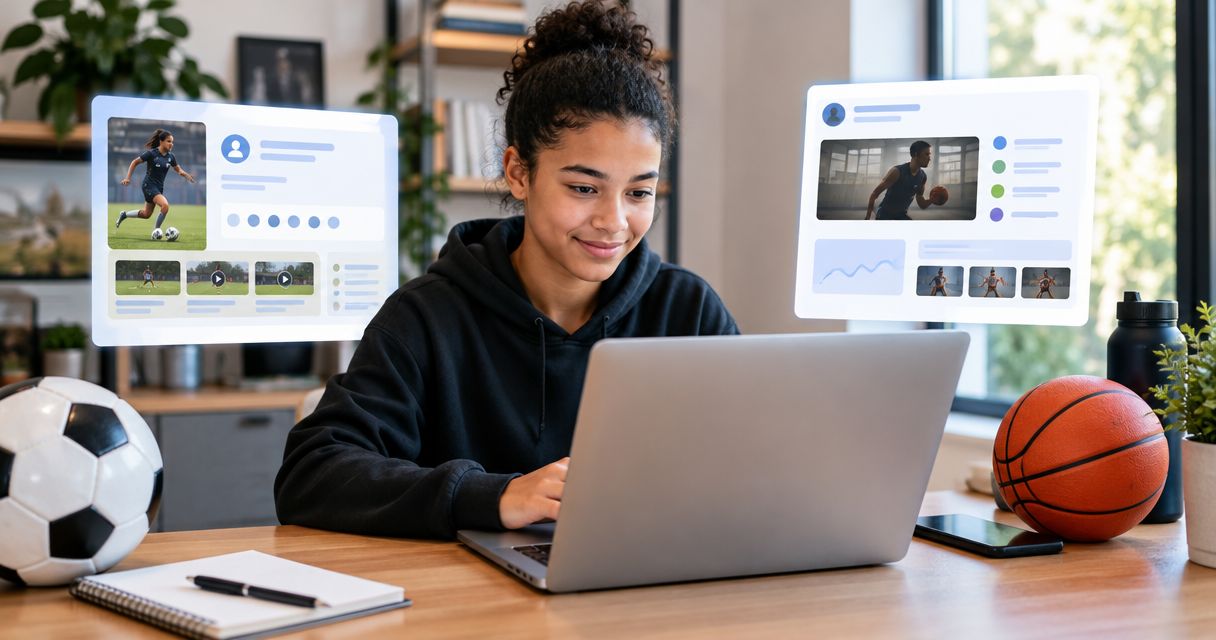
Choose RecruitMyGame if you need roster and coach-fit insights to help decide which colleges to contact; choose SportsRecruits if your team already uses it and keeping recruiting activity in that established workflow is your priority. This 2026 comparison separates choosing suitable programs from managing a recruiting process you already have.
- RecruitMyGame vs SportsRecruits: choose fit insights for target selection, or an established team workflow for continuity.
- RecruitMyGame supports athlete profiles, Tosch.ai roster and coach-fit insights, and college coach connections across 20+ sports.
- SportsRecruits is the continuity choice when your team already uses it and its workflow meets your needs.
- Neither platform replaces direct confirmation from a college coach about recruiting interest or roster needs.
Why this matters
A college recruiting platform should help you make a decision or complete an action. Building a profile, choosing suitable programs, and keeping track of conversations are different jobs. Buying another account does not automatically solve the job that is holding you back.
For your 2026 search, identify the bottleneck first. If you cannot explain why a college belongs on your target list, investigate fit. If you already have suitable targets but your recruiting activity is scattered, prioritize a process you and your support network will actually use.
The useful comparison is target selection versus workflow continuity—not an unsupported claim that one platform wins every feature.
At a glance
| Dimension | RecruitMyGame | SportsRecruits |
|---|---|---|
| Best for | US high school athletes seeking roster and coach-fit insights | Athletes whose teams already use it and want to maintain that workflow |
| Target selection | Access to roster and coach-fit insights from Tosch.ai | Assess whether your existing process answers your targeting questions |
| Team continuity | Evaluate how a new platform would fit your current process | The continuity choice when your team already works there |
| Athlete profile | Profile building is part of the platform | Keep an existing profile useful rather than duplicating it without a purpose |
| Coach outreach | Supports connections with college coaches | Keep established recruiting activity together when that is working |
| Sport suitability | Covers 20+ sports; confirm your specific sport | Confirm suitability for your sport and team process |
| Pricing model | Check billing terms and included access before committing | Check individual access and any access arranged through your organization |
| Standout feature | Tosch.ai roster and coach-fit insights | Continuity for an athlete already using it with a team |
The SportsRecruits recommendation is conditional: it applies to an athlete with an established team workflow. It is not a claim that every team uses the platform or that every account includes the same services.
RecruitMyGame wins when choosing target colleges is the problem
RecruitMyGame is best for US high school athletes who want roster and coach-fit insights to guide college targeting. Its stated college recruiting platform combines athlete profiles, insights from Tosch.ai, and connections with college coaches across 20+ sports.
That combination is relevant when your target list is driven by familiar school names rather than a clear explanation of fit. You need reasons to contact a program, not merely another place to record its name.
Use a fit insight as the beginning of a question. Ask whether the program recruits your position or event, how your graduation class affects the conversation, and what information the coach needs to evaluate you.
The limitation is equally important: an insight is not a coach's confirmation. Do not describe yourself as a recruiting priority because a platform identifies a potential match. Your next move is a specific conversation with the program.
For a deeper look at that decision, compare roster-fit and coach-fit tools for college recruits.
SportsRecruits wins on continuity when your team already uses it
SportsRecruits is the better continuity choice when your team already uses it, the relevant people participate there, and the existing process supports your recruiting work. In that situation, switching has to solve a defined problem.
The advantage comes from your circumstances, not an assumed feature gap. A familiar process gives you a place to continue work without deciding which account should hold each update or conversation.
Before adding another platform, ask your team contact:
- Which recruiting tasks should stay in the existing process?
- Who helps review your target list and outreach?
- What problem would a second platform solve?
The drawback of staying is inertia. Familiarity is not evidence that your target list is suitable or that your outreach is effective. Keep SportsRecruits because the workflow serves you—not simply because an account exists.
For a 2026 decision, distinguish an actively used team process from an account nobody helps you use. Only the first supports a continuity argument.
Accurate athlete information is a tie: you own that work
Neither option removes your responsibility to provide accurate athlete information. A recruiting profile is useful only when a coach can understand who you are and what you are presenting.
Keep your graduation class, school information, athletic details, and contact information consistent wherever you share them. Include relevant footage or results when the recruiting context calls for them, and make clear what each item represents.
A second account creates another place to maintain information. That is a practical downside if you already struggle to keep your existing materials current.
Do not switch platforms to avoid fixing an incomplete profile. First make your information clear; then decide whether a different tool helps you use it.
This is a tie in responsibility, not a claim that the two profile systems have identical fields or functions. Compare the actual workflow you would use rather than assuming feature parity.
Fit insights win for uncertainty; continuity wins for execution
Choosing where to reach out and completing the outreach are separate decisions. Your platform choice should follow whichever task is currently blocked.
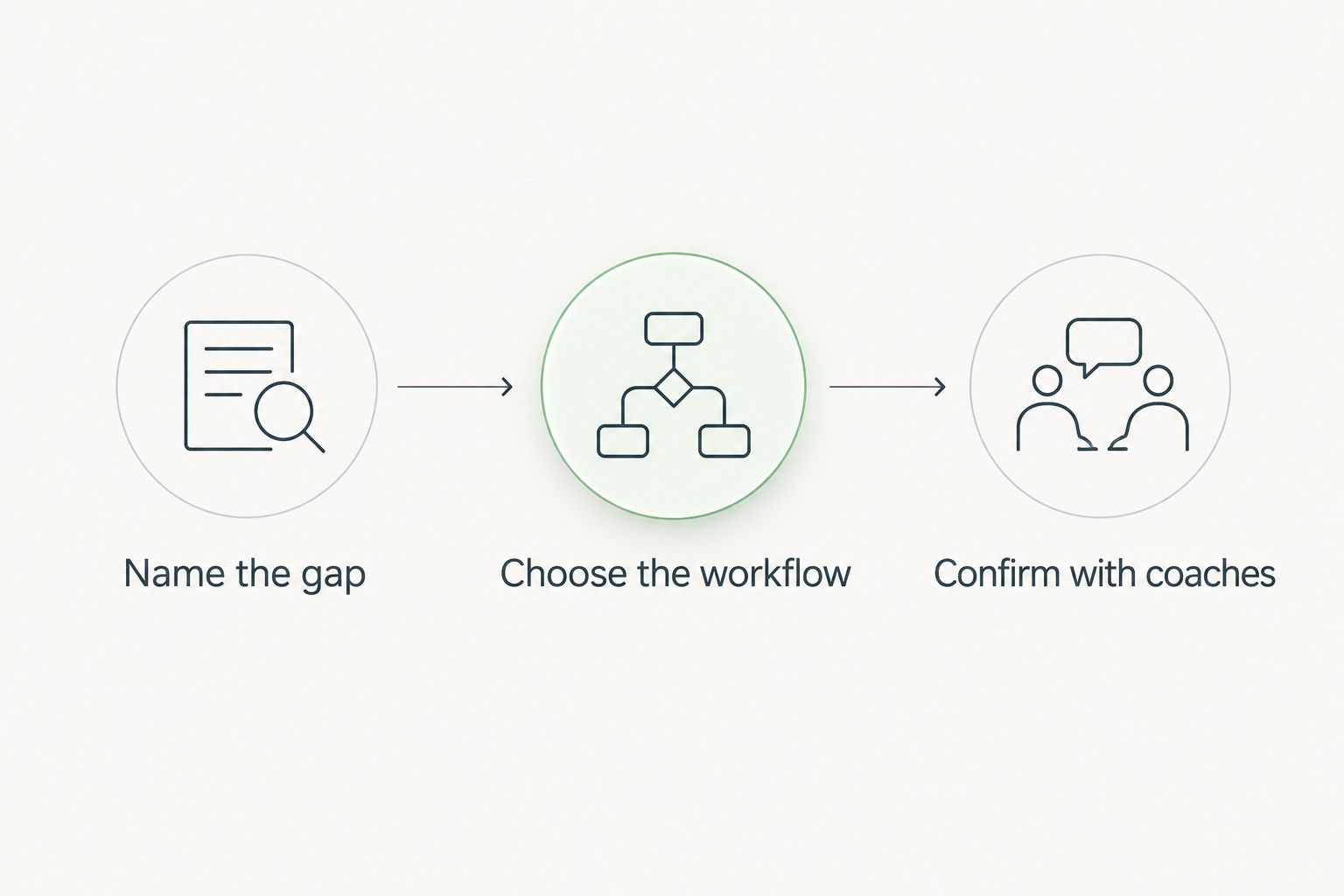
Use this sequence before opening another account:
- Name the gap. Write down the recruiting task you cannot complete confidently.
- Choose the workflow. Decide whether you need better targeting or a better way to continue existing work.
- Confirm with coaches. Turn your shortlist into specific questions for the programs involved.
For example, compare 2 programs on your current list. Write one reason each belongs there and one unanswered question for its coach. This is a decision exercise, not a scoring formula.
If both explanations amount to liking the school, investigate fit before expanding the list. If you have clear reasons and unanswered messages, focus on completing the communication process instead.
The tradeoff is straightforward: better targeting does not send your next message, and a familiar workflow does not establish that your targets are suitable. You remain responsible for connecting those tasks.
Neither platform wins on coach confirmation
A platform can support your recruiting work without speaking for a college program. A coach's interest, current needs, and evaluation of your information require direct confirmation.
Before treating a school as a serious target, prepare 3 questions:
- Are you evaluating athletes in my graduation class for my position or event?
- What information do you need to assess my athletic fit?
- What should my next recruiting step with your program be?
Use answers to update your plan. Do not treat a completed profile, a suggested fit, or an unanswered introduction as equivalent to an offer or a roster commitment.
This is an honest tie. Neither brand deserves a win for an outcome controlled by a college program, and neither should be selected on an assumed promise of that outcome.
Sport coverage is a screening question, not a final verdict
The stated coverage of 20+ sports is relevant, but breadth alone does not settle your choice. Confirm that the platform supports your sport and the specific recruiting task you need to complete.
For SportsRecruits, start with your actual team setup rather than a general recommendation from another athlete. A workflow that suits someone else's sport or organization is not proof that it suits yours.
Ask what you can present, what information you can use to evaluate programs, and how the process supports your next action. These questions are more useful than comparing broad coverage claims in isolation.
In 2026, screen for your sport before comparing convenience. A polished process still fails your needs if it cannot support the information your recruiting conversations require.
Pricing: compare billing structure and included work
Check the current billing terms directly before committing to either option. Evaluate who pays, what access is included, how renewal works, and what happens when an athlete leaves a participating organization.
For the fit-focused option, establish which profile, insight, and coach-connection functions are included in the access you are considering. For SportsRecruits, establish whether you are evaluating individual access or access arranged through your team or organization.
These are purchasing checks, not assertions that either company offers a particular billing arrangement. Do not assume that an athlete's account, a team's arrangement, and another family's account have matching terms.
The model tradeoff is predictability versus flexibility: an ongoing commitment needs sustained usefulness, while a shorter commitment needs enough access to finish your task. Apply that distinction to the actual terms offered, not an assumed plan structure.
Before choosing in 2026, explain the purchase in one sentence: what work will this access help you complete that you cannot complete adequately now? If the answer is unclear, clarify the need before committing.
Final verdict: choose the missing capability, not another login
Choose RecruitMyGame if you are building a fit-led target list
Best for: the US high school athlete who needs better reasons to approach particular college programs. Choose this option when access to roster and coach-fit insights addresses your immediate recruiting question.
The benefit is alignment with target selection. The limitation is that you must still verify program needs, maintain your information, and follow through with coaches. Treat the platform as support for those actions, not a replacement for them.
Choose SportsRecruits if your team workflow already works
Best for: the team-connected athlete who already has a useful process there. Choose SportsRecruits when keeping that process intact matters more than adding another platform.
The benefit is continuity. The limitation is that continuity alone does not resolve uncertainty about college fit. Reassess when you can name a recruiting task your current process does not answer.
| Dimension | Winner |
|---|---|
| Fit-led college targeting | Fit-insight option |
| Established team workflow | SportsRecruits, when your team already uses it |
| Accurate athlete information | Tie: athlete responsibility |
| Targeting versus execution | Match the option to the blocked task |
| Coach confirmation | Tie: direct program confirmation required |
| Sport suitability | Confirm against your specific sport |
| Pricing model | Choose against actual terms and included access |
FAQ
Is RecruitMyGame better than SportsRecruits for college recruiting?
RecruitMyGame is the fit-led choice for US high school athletes seeking roster and coach-fit insights. SportsRecruits is the continuity choice when an athlete's team already uses it and that workflow meets the athlete's needs.
Should I switch if my team already uses SportsRecruits?
Keep SportsRecruits when your existing team workflow serves your recruiting needs. Consider another platform only after identifying a specific task that the current process does not address.
What do roster-fit and coach-fit insights tell me?
Roster-fit and coach-fit insights help you investigate potential college targets. They do not establish a coach's recruiting interest, guarantee a roster place, or replace direct questions to the program.
Do I need two college recruiting platforms?
Use two platforms only when each serves a distinct recruiting task. Otherwise, duplicate accounts create more information to maintain without a clear purpose.
How should I compare recruiting platform costs?
Compare current billing terms, included access, renewal conditions, and who pays. Confirm whether the access you are evaluating is individual or arranged through an organization rather than assuming accounts have matching terms.
Will a recruiting platform guarantee a college roster spot?
Do not treat a recruiting platform as a guarantee of a college roster spot. Confirm recruiting interest and next steps directly with the college program.
What should I do before choosing a recruiting platform in 2026?
Identify the recruiting task that is blocked before choosing a platform in 2026. Separate uncertainty about suitable colleges from difficulty maintaining profiles, outreach, or an established team process.
One last thing
Before you create another account, open your current college list and explain why each program belongs there. Then write the next question you need that program's coach to answer.
An unanswered recruiting question is a better buying criterion than a longer feature list. Choose the platform that helps you act on that question, and keep responsibility for the answer with the college program.