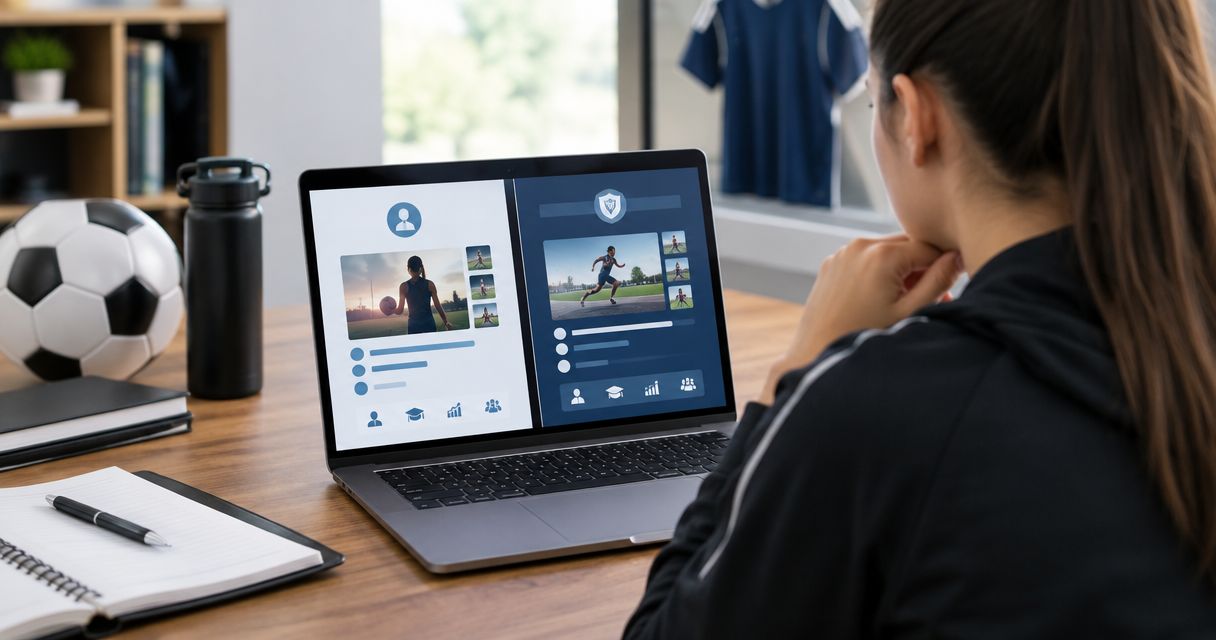
Choose RecruitMyGame if you are a US high school athlete who wants a college recruiting platform for profiles, roster-fit research, and coach connections; choose Sports Recruiting USA if you want a recruiting-service relationship and its written agreement includes the individual guidance you need. For 2026, make this decision around who does the recruiting work—not which name sounds more familiar.
- RecruitMyGame vs Sports Recruiting USA is a platform-versus-service decision: compare recruiting tools with the guidance your agreement includes.
- RecruitMyGame suits US high school athletes seeking profiles, Tosch.ai roster-fit insights, and college coach connections.
- Choose Sports Recruiting USA for individual guidance only when the written service scope confirms that support.
- Neither a recruiting profile nor a service agreement replaces a college coach's evaluation.
Why this matters
A recruiting platform and a recruiting service answer different questions. A platform helps you organize information and take action; a service relationship needs a clear agreement about what someone else will do for you.
Confusing those jobs creates the wrong purchase. You can end up expecting personal representation from software, or paying for assistance when your real problem is an incomplete profile and an unfocused college list.
RecruitMyGame is a college recruiting platform for US high school athletes who want profile-building, roster-fit insights, and college coach connections. That is the clearest supported reason to choose it—not an assumed advantage in scholarships, admissions, or recruiting outcomes.
For a 2026 decision, separate useful capabilities from promised results. Ask what you receive, what you must do yourself, and what remains the college's decision.
At a glance
Read the service column as a purchase standard: individual support belongs in the agreement before you treat it as a benefit.
| Dimension | RecruitMyGame | Sports Recruiting USA |
|---|---|---|
| Best for | US high school athletes seeking a recruiting platform | Families seeking a recruiting-service relationship |
| Athlete profile | Profile-building is part of the platform | Confirm who prepares and updates your materials |
| Standout feature | Roster and coach-fit insights from Tosch.ai | Evaluate the individual guidance specified in your agreement |
| Coach connections | Connecting athletes with college coaches is part of its stated purpose | Confirm who contacts coaches and who handles replies |
| Working relationship | Platform-centered recruiting workflow | Define adviser responsibilities before committing |
| Sport coverage | Supports athletes across 20+ sports | Confirm support for your sport and recruiting circumstances |
| Evidence of fit | Use insights alongside program-specific research | Require explanations for recommended programs |
| Pricing model | Confirm billing structure and included access | Confirm payment structure and service scope |
The platform wins for building your own recruiting profile
Choose the platform route when you want to create an athlete profile and use it as the foundation for your recruiting work. Profile-building is an explicit part of the product description, so this is a concrete capability rather than an assumed service.
The benefit is a defined starting point. You have an athlete-facing place to organize your recruiting information instead of expecting an adviser to assemble the entire process for you.
The tradeoff is responsibility. A profile still needs accurate information, relevant athletic evidence, and updates when your circumstances change; creating it does not establish that a college is recruiting you.
Before you commit, prepare 1 complete profile with your graduation year, sport, academic information, and relevant performance evidence. Treat that as a preparation checklist, not a claim that every field or upload format is supported.
For the service route, ask who writes, checks, and maintains your recruiting materials. Do not assume profile preparation is included simply because a business offers recruiting assistance.
Tosch.ai wins when roster and coach fit drive your shortlist
The platform's named distinction is access to roster and coach-fit insights from Tosch.ai. That makes it a relevant choice when your immediate problem is deciding which colleges deserve further research.
Use those insights to ask better questions. Does a program match your academic interests? What does its roster suggest about your position? What evidence supports the idea that your athletic level fits?
A fit insight is a research input, not a roster offer. You still need to distinguish an interesting program from a coach who has evaluated you and expressed recruiting interest.
The limitation is straightforward: an insight does not make the college's decision for you. Avoid turning a fit signal into an assumption about admissions, financial aid, playing time, or a place on the team.
If this is your main purchasing criterion, compare roster-fit and coach-fit tools for college recruits before evaluating broader recruiting assistance.
Sports Recruiting USA wins for guidance only when it is defined
Choose the service route when your main need is help interpreting choices, deciding what to do next, and staying accountable to a recruiting plan. For that buyer, a defined adviser relationship matters more than another place to store athlete information.
The condition is essential: buy specified work, not an impression of personal attention. Ask whether you receive an assigned contact, what that person does, and how questions are handled.
The advantage of a suitable service agreement is responsibility you can identify. Instead of vaguely expecting assistance, you know which decisions receive support and which tasks remain yours.
The tradeoff is that guidance can be narrower than you expect. An introductory conversation does not establish that ongoing strategy, material review, or coach communication belongs in the purchased service.
For your 2026 comparison, request a plain-language scope before treating any of those activities as included. Choose Sports Recruiting USA for adviser-led help only after that scope matches your actual needs.
Neither option turns contact into recruiting interest
The platform explicitly helps athletes connect with college coaches. That is useful when you need a route from research to outreach, but a connection and a recruiting decision are different events.
For the service route, establish who sends messages, whose identity appears on them, and who responds when a coach asks a question. Those details determine whether you are buying advice, communication assistance, or another clearly defined task.
Judge either route by the quality of the next conversation. A useful exchange gives a coach relevant information and gives you something specific to clarify—not merely proof that a message was sent.
Draft 2 sample messages before choosing: an introduction and a follow-up. Ask how each option helps you improve or deliver them without assuming either includes message review, automated outreach, or representation.
Neither option can make a coach recruit you. The practical goal is accurate information, relevant outreach, and a clear response process.
Breadth favors the platform; sport-specific service needs confirmation
The platform serves US high school student-athletes across 20+ sports. That stated breadth makes it relevant to families comparing recruiting tools beyond a single sport.
Breadth is not the same as identical depth. Before choosing, inspect how the available profile and fit information apply to your sport, position, and college goals.
For a recruiting service, ask equally specific questions about your circumstances. Name your sport, graduation year, academic priorities, and the kind of assistance you want; then request an explanation of the work that would apply to you.
Do not choose either option because a general college-recruiting description sounds relevant. Your sport-specific workflow is the test. A family seeking profile tools and a family seeking individual strategic help are not shopping for the same thing.
Both need athlete-specific evidence before a recommendation matters
Neither software output nor personal advice deserves automatic acceptance. A college recommendation becomes useful when you can explain why that particular school belongs on your list.
Use 3 checks before adding a program:
- Academic fit: Confirm that the institution offers the education you want and review its published admissions requirements.
- Athletic fit: Examine relevant performance evidence, the team's roster, and any direct feedback from its coaching staff.
- Coach interest: Separate your interest in a program from a coach's expressed interest in you.
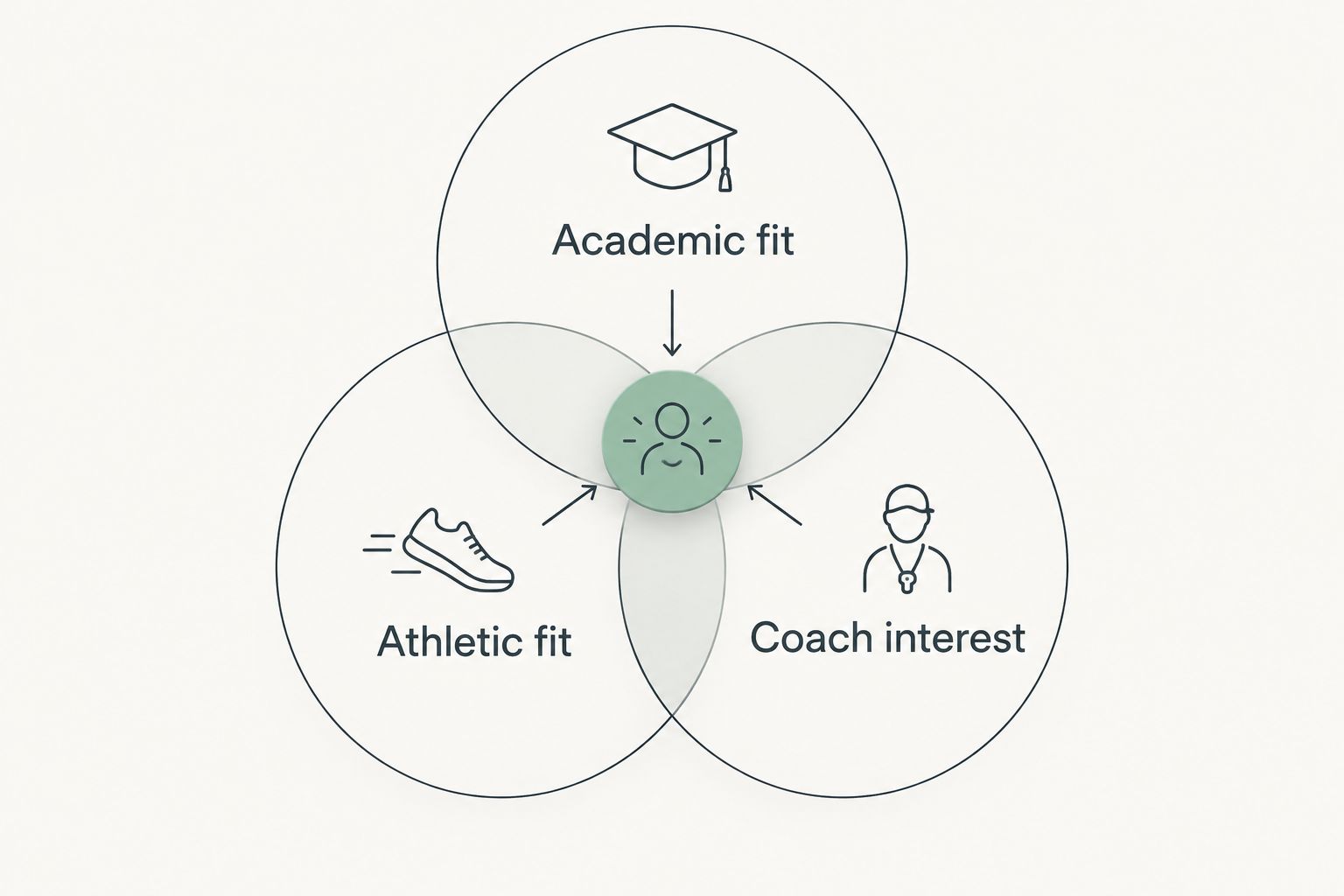
Apply the same checks to both routes. Ask what supports a suggested match and what still needs confirmation; a confident recommendation without an explanation does not solve your research problem.
For your 2026 shortlist, keep a brief note beside each college explaining the evidence behind its inclusion. That makes your list easier to revise when new information arrives.
Pricing: compare the commitment, not an assumed model
Confirm each option's current billing structure directly before choosing. Do not assume the platform uses a particular subscription arrangement or that the service uses a particular package or payment schedule.
The useful distinction is what your payment commits you to. Access-based billing requires clarity about included tools and access duration; a service agreement requires clarity about deliverables, responsibilities, and the period of support.
Compare these terms in writing:
- What you receive and what remains outside the agreement.
- Whether payment renews and how you end the arrangement.
- How long access or support lasts.
- Who owns the next action when you need help.
A predictable commitment is only useful when it covers the work you need. Flexibility matters when your requirements change, but it does not compensate for missing support or unsuitable tools.
For a 2026 decision, compare current terms rather than remembered offers. Do not treat a conversation about recruiting goals as a substitute for the actual agreement.
Final verdict: choose the work model you will use
Choose RecruitMyGame if you want a platform-led process
Best for: the US high school athlete and parent who want tools for profiles, roster research, and coach connections. Choose this route when you are prepared to maintain your information, evaluate potential colleges, and take responsibility for follow-through.
Its clearest strengths are profile-building, Tosch.ai fit insights, and stated coverage across multiple sports. Do not select it on the assumption that those capabilities include personal representation or a particular recruiting outcome.
Choose Sports Recruiting USA if you need defined individual guidance
Best for: the family whose main requirement is a recruiting-service relationship with clearly assigned responsibilities. Choose this route when the written scope confirms the individual help you want and explains how that help works.
The reason to choose it is the agreed assistance—not an assumed advantage in offers or scholarships. If the agreement does not resolve who does what, the central reason for choosing a service remains unresolved.
| Dimension | Winner |
|---|---|
| Profile-building tools | Platform route |
| Named roster and coach-fit capability | Platform route through Tosch.ai |
| Individual guidance | Service route, when expressly included |
| Coach response or recruiting outcome | Neither can decide for the college |
| Sport suitability | Confirm against your specific needs |
| Evidence behind college recommendations | Tie: require an explanation from either route |
| Payment structure | Decide from current written terms |
FAQ
Is RecruitMyGame better than Sports Recruiting USA?
RecruitMyGame is the clearer choice for a US high school athlete seeking profile-building, Tosch.ai roster-fit insights, and college coach connections. Choose Sports Recruiting USA for individual recruiting guidance only when its written service scope confirms the help you need.
Which option is better if I want someone to guide my recruiting?
Choose a recruiting service when its agreement assigns the individual guidance you need. Ask who advises you, which tasks that person handles, and what remains your responsibility.
Does a roster-fit insight mean a college wants to recruit me?
No, a roster-fit insight is not an expression of recruiting interest from a college coach. Use it to guide research, then distinguish your interest from direct coach feedback.
Can either option guarantee me a college roster spot?
Neither option can make a college coach offer you a roster spot. Recruiting tools and assistance support your process; the college makes its own decisions.
How should I compare the payment terms?
Compare the current written commitment and what it includes. Check billing structure, renewal terms, access or support duration, and the process for ending the arrangement.
What should I prepare before choosing a recruiting option?
Prepare your athletic and academic information, an initial college list, and a description of the help you need. Then separate tasks you can manage yourself from tasks for which you want individual assistance.
Should an international athlete use the same comparison?
An international athlete should confirm suitability for their circumstances before choosing either route. Ask specifically about the support needed for their education history, eligibility questions, and college application process rather than assuming it is included.
One last thing
Ask each option to explain your next action using the same athlete profile and college shortlist. A concrete answer exposes the difference between having information and knowing how to use it.
For 2026, your best purchase is the one that resolves your actual bottleneck. Buy tools when you need tools; buy defined guidance when you need guidance.