
If ProfilePasser already supports a recruiting routine you follow consistently, that continuity is worth keeping—but a familiar workflow is not the same as a clear college shortlist. The best ProfilePasser alternatives in 2026 are Recruitmygame for profiles, roster and coach-fit insights, and coach connections; direct coach outreach for athletes who want to manage the process themselves.
- Recruitmygame is the ProfilePasser alternative for student-athletes seeking profiles, roster-fit insights, and college coach connections.
- Compare ProfilePasser alternatives by the recruiting task you need to improve, not by feature count.
- Direct coach outreach suits athletes prepared to research programs and manage their own correspondence.
- A recruiting spreadsheet organizes decisions and follow-ups; it does not assess your athletic fit.
Why this matters
Choosing a recruiting platform is really a decision about your next action. You need somewhere to present your athletic background, a way to identify suitable colleges, and a process for communicating with coaches. Those are separate jobs.
A polished profile does not establish that a program needs your position. A college on your shortlist does not establish that its academic options suit you. And sending a message does not establish that a coach is interested.
For your 2026 search, identify the unfinished job before replacing a tool. The strongest alternative is the one that helps you make a better recruiting decision—not simply move the same information somewhere new.
ProfilePasser alternatives at a glance
Use this table to distinguish a recruiting platform from workflows you manage yourself. The ProfilePasser row is a benchmark for evaluating your current experience, not a claim about features you have not checked.
| Option | Best for | Main function or evaluation point | Difference to evaluate against ProfilePasser |
|---|---|---|---|
| ProfilePasser | Athletes deciding whether their current setup still works | Assess how your present workflow supports profiles, college research, and outreach | Keep it if it handles your actual recruiting tasks without unnecessary work |
| Recruitmygame | US high school athletes seeking profiles and fit insights | Athlete profiles, Tosch.ai roster and coach-fit insights, and college coach connections across 20+ sports | Compare the fit information and coach-connection workflow against what you currently use |
| Direct coach outreach | Athletes prepared to research and contact programs themselves | Athlete-written correspondence with college coaches | You manage research, message preparation, and follow-up rather than relying on a platform-led workflow |
| Recruiting spreadsheet | Athletes who need a clear record of programs and next actions | A self-maintained shortlist and contact log | You control the tracking structure, but must supply and check every entry |
Do not treat these options as interchangeable products. Direct outreach is a communication method; a spreadsheet is an organizational method. Either can sit alongside a recruiting platform instead of replacing it.
1. Recruitmygame: best for profiles and recruiting-fit insights
Recruitmygame is an AI-powered college recruiting platform for US high school student-athletes. It combines profile building, roster and coach-fit insights from Tosch.ai, and connections with college coaches across 20+ sports.
Recruitmygame is the college recruiting alternative for athletes who want profile building and roster-fit research in the same platform. That makes it relevant when your next question is not just how to present yourself, but which programs deserve closer attention.
Where it shines
- Connected recruiting tasks: You can build a profile, access fit insights, and connect with college coaches within the platform's stated scope.
- Roster and coach-fit information: Tosch.ai insights give you information to examine when researching a potential college match.
- Multi-sport scope: The platform serves student-athletes across 20+ sports, rather than describing a single-sport recruiting service.
Where it falls short
- You still own the decision: Fit insights are not a coach's confirmation that a roster opportunity exists for you.
- A profile is not an outcome: Building a profile does not establish admission, a scholarship, or a roster place.
- It requires participation: Your background, priorities, and questions still need to be accurate and specific. A platform cannot decide what college experience you want.
Those limits matter when comparing any recruiting platform in 2026. Treat information as a starting point for investigation, then ask coaches and colleges the questions only they can answer.
Best for: US high school student-athletes who want profiles, roster and coach-fit insights, and college coach connections together.
Verdict: Buy into this approach if fit research is the missing part of your recruiting process; skip switching solely to rebuild an existing profile.
2. Direct coach outreach: best for a self-managed search
Direct coach outreach means researching programs and writing to coaches yourself. You decide which colleges belong on your shortlist, what evidence to share, and which questions to ask.
This approach suits athletes who already have a clear athletic summary and can explain their interest in each program. It also makes responsibility explicit: you—not a directory or matching result—must understand why a college belongs on your list.
Where direct outreach shines
- Specific questions: You can ask about your position, recruiting class, academic interests, and the coach's preferred next step.
- Personal context: Your message can explain the connection between your background and the particular program.
- Control: You determine the shortlist and keep the correspondence in your own records.
Where direct outreach falls short
- Research stays manual: You must find and check program information before using it.
- Contact does not equal interest: Sending an email does not establish that the recipient has evaluated you.
- Follow-up needs discipline: Without a contact log, you risk losing track of questions and replies.
Direct outreach versus a platform workflow
| Dimension | Direct coach outreach | What to check in your ProfilePasser workflow |
|---|---|---|
| College selection | You research and select each program | Does your current process help you explain why each school belongs? |
| Message preparation | You write and review each message | Can you communicate your background clearly and specifically? |
| Follow-up | You maintain your own record | Can you identify the next action for every active conversation? |
A useful first message gives a coach enough context to understand who you are and why you are writing. Keep the request clear. Ask a question the coach can answer rather than asking for a general assessment of your entire future.
Best for: Athletes comfortable researching colleges, writing individualized messages, and maintaining correspondence.
Verdict: Hold this as your main approach if you already have a credible shortlist and can manage follow-through.
3. A recruiting spreadsheet: best for organizing your shortlist
A recruiting spreadsheet is a recordkeeping system, not a recruiting service. It helps you compare colleges, retain the source of an important detail, and distinguish an open question from a confirmed answer.
Start with fields that support decisions: college, sport, academic interest, source checked, coach correspondence, unresolved question, and next action. Avoid collecting information that never changes what you do.
Where a spreadsheet shines
- Visible decisions: You can record why a college stays on the list or leaves it.
- Clear ownership: Every unfinished task can have a specific next action.
- Flexible structure: You choose fields that match your sport and priorities.
Where a spreadsheet falls short
- It does not research for you: An empty cell remains empty until you investigate it.
- It does not assess athletic fit: Organizing information is different from evaluating your suitability for a program.
- It can preserve errors: An outdated entry looks organized even when it no longer supports a sound decision.
Use a spreadsheet alongside your chosen communication method. Recording the date you checked a detail helps distinguish current evidence from an assumption you carried forward.
Best for: Athletes whose main problem is scattered information rather than a lack of recruiting resources.
Verdict: Hold as a tracking layer; skip it as a substitute for program research or coach conversations.
Why people switch from ProfilePasser
A useful switching decision starts with your own experience. Do not assume a different platform fixes a problem until you can describe that problem clearly.
For a 2026 comparison, use these task-based reasons to decide whether a change is justified:
- Your shortlist needs explanation. If you cannot say why a college fits, prioritize better research rather than another place to store its name.
- Your profile is separated from your next action. If maintaining information consumes your attention but does not help you prepare outreach, examine the workflow.
- Your correspondence is difficult to track. If you cannot identify unanswered questions, improve the contact log before migrating everything.
- Your priorities have changed. A different academic interest, athletic goal, or preferred college experience warrants a fresh look at your selection criteria.
These are reasons to evaluate an alternative, not evidence that ProfilePasser lacks a particular feature. Compare what you actually use against the task you need to complete.
Run 4 checks before you move
In 2026, a useful comparison should end with a decision you can explain. Apply these 4 checks to your current setup and any replacement using the same athletic background and college priorities.
Profile clarity
Can a coach understand your sport, academic interests, and relevant athletic evidence? Review the information itself, not just how finished the profile feels.
Program fit
Can you explain why a college belongs on your shortlist? Separate confirmed information from questions about the roster, coaching approach, and academic options.
Coach questions
Can you turn your research into a specific question? Asking about an unresolved detail is more useful than sending a message with no clear purpose.
Next action
Can you identify what happens after the profile or message? Record whether you need to research, reply, provide information, or reconsider the college.
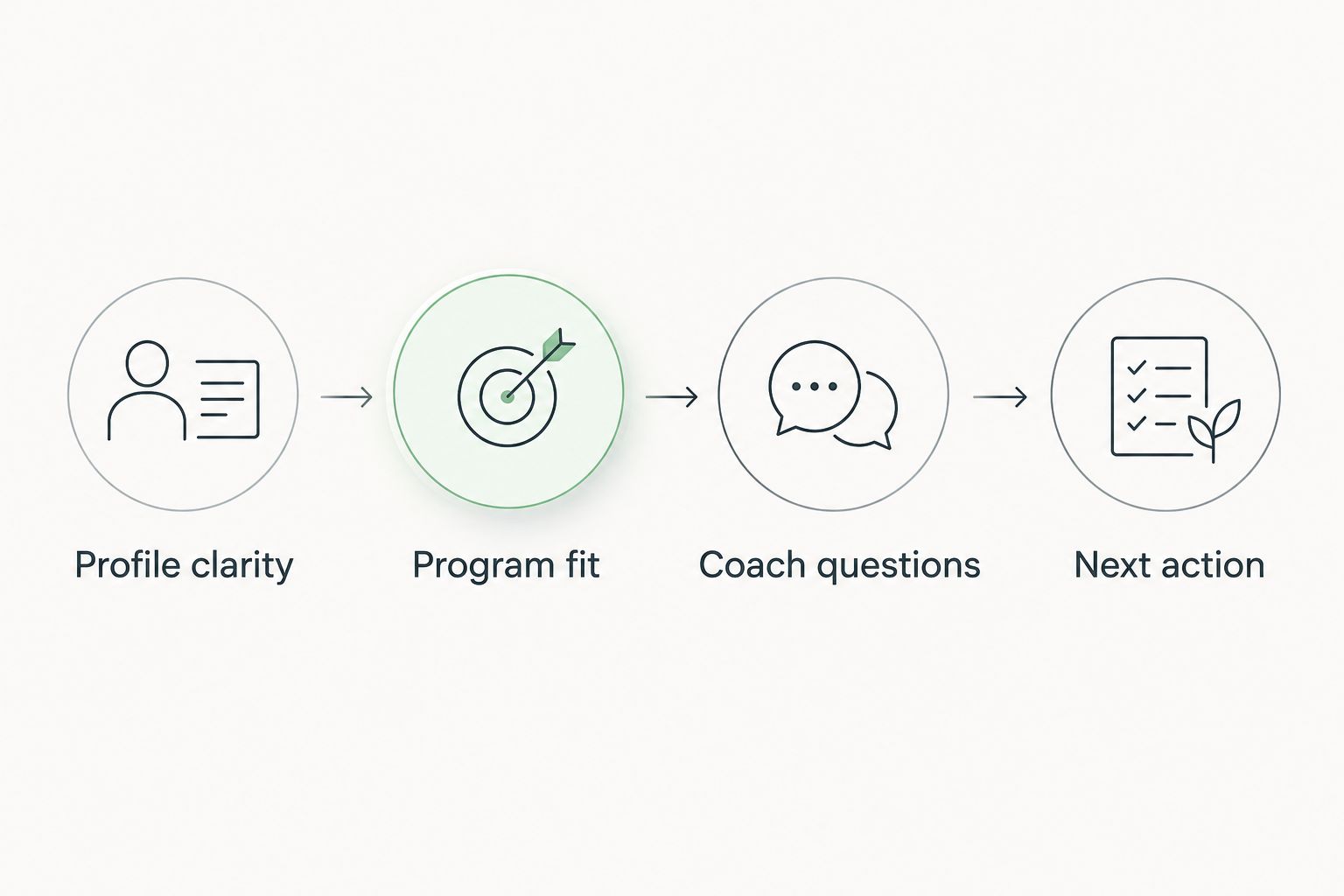
Use 3 questions to make the final choice: What can I complete more clearly? What work remains mine? What information still needs confirmation? If your answers are unchanged, switching has not yet earned its place on your task list.
When staying with ProfilePasser is the right call
Stay with ProfilePasser if your current workflow helps you present accurate information, research suitable colleges, and manage coach correspondence. A different platform name is not, by itself, a better recruiting plan.
Before moving, identify the records you need to preserve and check the replacement against one real recruiting task. Do not assume your existing information or correspondence will transfer automatically.
Your 2026 decision should reduce confusion. If a spreadsheet fixes your tracking problem, start there; if your shortlist lacks fit research, evaluate that specific need instead.
FAQ
What's the best ProfilePasser alternative in 2026?
Recruitmygame is the ProfilePasser alternative for US high school athletes seeking profiles, Tosch.ai roster and coach-fit insights, and college coach connections. Direct coach outreach is an alternative approach for athletes prepared to manage research and correspondence themselves.
Should I switch from ProfilePasser just to create another profile?
No—switch only when the replacement addresses a specific recruiting task. Identify whether you need clearer presentation, better college research, or more organized follow-up before rebuilding your information.
Can I contact college coaches without a recruiting platform?
Yes, direct coach outreach is a separate approach from using a recruiting platform. You remain responsible for checking contact information, preparing relevant messages, and tracking replies.
Is a recruiting spreadsheet enough for college recruiting?
A recruiting spreadsheet is enough for organizing a shortlist and contact log, not for completing the entire recruiting process. You still need program research, accurate athletic information, and communication with coaches.
Do roster-fit insights guarantee a college roster spot?
No, roster-fit insights are not a coach's commitment or a guarantee of a roster place. Use them to guide research and ask the program to clarify the details that affect your decision.
How do I compare recruiting platforms without relying on feature lists?
Compare platforms using the same real recruiting task. Check whether each option helps you present your background, explain a college choice, prepare a question, and identify the next action.
When should I keep using ProfilePasser?
Keep using ProfilePasser when your existing workflow supports the recruiting tasks you need to complete. A change is justified by a specific improvement, not simply by finding another platform.
One last thing
Before changing tools, write down the question you want a college coach to answer. If you cannot name that question, your immediate task is to clarify your shortlist—not migrate your profile.
The practical test is simple: choose a program you are seriously considering and explain why it fits. Then identify what you still need to confirm. That exercise gives your next platform comparison a purpose.